CultureTechnology•6 min read
800 Artists Sign Letter Against Generative AI: They Accuse Massive Theft of Copyrighted Works

Artists and Creators Against Generative AI Over Copyright
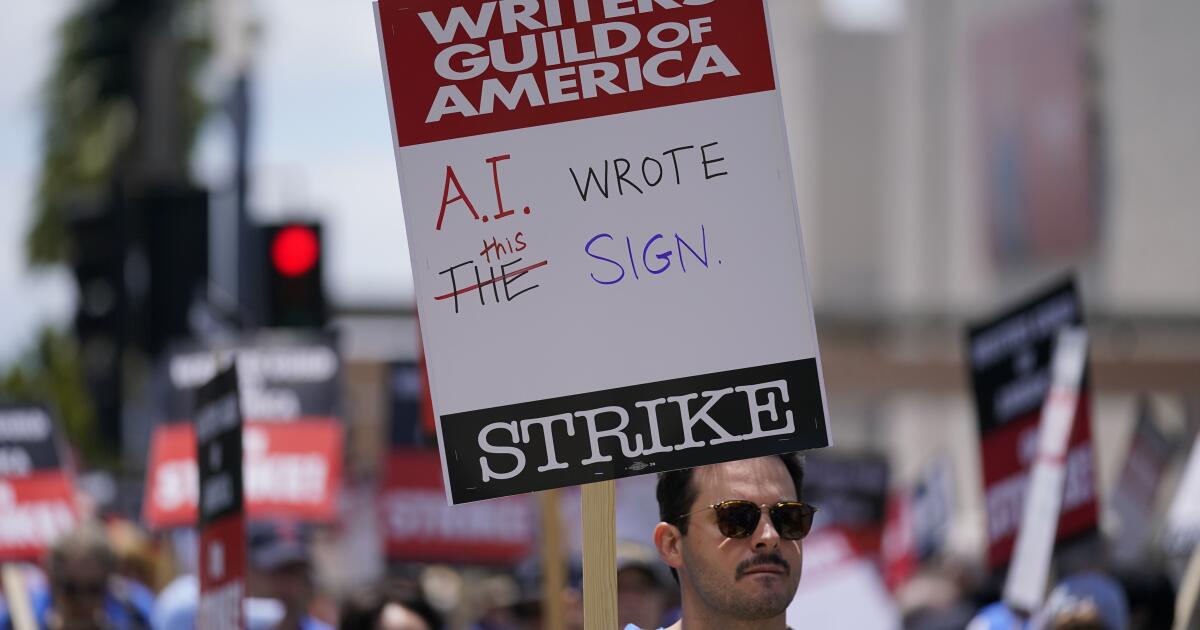
The war between Silicon Valley and Hollywood just escalated. About 800 arts and entertainment personalities, actors, writers, musicians, illustrators, signed an open letter accusing tech companies of "stealing" copyrighted works to train generative artificial intelligence models. The document, which has been circulating on social media and news outlets for days, marks the highest point of tension so far in the clash between digital innovation and protection of traditional art.
The letter doesn't mince words. The signatories argue that companies like OpenAI, Google, Meta, and others use millions of creative works, books, scripts, songs, illustrations, without asking permission or offering compensation to their authors. The tech companies' argument is that AI training constitutes "fair use" under intellectual property laws, similar to how a student can read thousands of books to learn without paying royalties. The artists respond that students don't then generate cheap versions of those works to sell massively.
The Debate Over Fair Use vs. Systematic Theft
The core of the conflict is legal, but also philosophical. Language models like ChatGPT or Claude were trained by ingesting vast amounts of text available on the internet: scanned books, news articles, leaked scripts, song lyrics. Images generated by Midjourney or DALL-E were trained with millions of illustrations, photographs, and paintings. The letter's signatories argue that this isn't "learning", it's appropriation at an industrial scale.
An unidentified spokesperson for the group of artists stated in a press release that "when an AI model produces an image 'in the style of' a specific illustrator, it's replicating years of work without compensating the original artist." The tech companies counter that models don't store complete works, they only learn statistical patterns, and therefore there's no direct copying. The artists reply that the end result, an AI that can produce comparable art without paying them, is functionally identical to theft.
Major Names Behind the Letter
Although the letter has not published a complete list of signatories (some prefer anonymity due to employment contracts with studios that use AI), sources close to the movement confirm participation from A-list actors, writers nominated for literary prizes, and musicians with decades-long careers. The diversity of signatories, from established stars to emerging artists, signals that the concern crosses generational and economic lines.
Musicians and Singers
| Artist | Initiative / Context |
|---|---|
| Billie Eilish | Signatory of the Artist Rights Alliance letter |
| Robert Smith (The Cure) | Participant in the protest album Is This What We Want? |
| Nicki Minaj | Protest against voice model training |
| Stevie Wonder | Defender of intellectual property against AI |
| Damon Albarn (Gorillaz) | Critic of AI use in music composition |
| J Balvin | Representative of the movement in the Latin music industry |
| Pearl Jam | Signatories against the replacement of human artists |
| Katy Perry | Support for digital copyright regulation |
Actors and Hollywood Personalities
| Artist | Notable Action |
|---|---|
| Scarlett Johansson | Public and legal complaint over unauthorized use of her voice |
| Cate Blanchett | Signatory of the "Stealing Isn't Innovation" campaign |
| Julianne Moore | Activist for image and likeness protection |
| Joseph Gordon-Levitt | Advocate for fair compensation for training data |
| Jennifer Hudson | Support for anti-deepfake legislation |
| Bryan Cranston | Opinion leader during SAG-AFTRA strikes |
Writers and Screenwriters
| Artist | Medium |
|---|---|
| Aaron Sorkin | Screenwriter; activist against using scripts for training |
| Richard Osman | Writer; signatory of literary property manifestos |
| Val McDermid | Writer; opponent of book scraping |
The document specifically mentions that young artists just starting their careers face impossible competition: how do you charge for illustrations when a client can generate "good enough" versions with AI in seconds and for free? How do you sell original music when algorithms produce generic songs at will? The letter argues that generative AI not only steals from the past, it destroys the future by making a professional artistic career unviable.
Ongoing Legal Cases
The letter doesn't emerge in a vacuum. Several class-action lawsuits are already underway against AI companies. Authors like Sarah Silverman and groups of writers have sued OpenAI and Meta for unauthorized use of works. Visual artists sued Stability AI (creators of Stable Diffusion) for the same reason. Courts have yet to issue definitive rulings, but these cases could establish precedents that define the industry for decades.
The tech companies respond with intense lobbying. They argue that strictly regulating AI training would put the United States at a disadvantage against China and Europe, where regulations differ. They also point out that history is full of technological disruptions that were initially resisted by established industries: the printing press, photography, cinema, digital music. According to this narrative, the artists are simply resisting inevitable progress.
Possible Solutions and Future Paths
The letter proposes several measures: licensing systems where AI companies pay for access to works; transparency about what data is used to train models; artists' right to exclude their work from training datasets; and retroactive compensation for works already used. None of these proposals is technically simple or politically neutral.
Some industry players have begun exploring collaboration models. Adobe, for example, trained its AI Firefly exclusively with images from its stock library (where it already has rights) and public domain content. Getty Images sued Stability AI, but also launched its own generative AI trained with its licensed catalog. These approaches suggest coexistence is possible, but require that companies prioritize ethics over development speed.
The debate also exposes a deeper philosophical tension: Is art work that deserves labor protection, or is it expression that should be free? Does human creativity have intrinsic value that must be preserved, or is it just a means to produce content that technology can optimize? The answers to these questions will determine not only current legal disputes, but the future of art as a profession.
The 800 artists' letter won't resolve the conflict, but it draws a line in the sand. It's no longer possible for tech companies to pretend that creators' concerns are irrational fear of change. The creative industry organized, hired lawyers, and demands answers. The next act of this drama will be in the courts, but the script is already written: art against algorithm, humanity against machine, creativity against optimization. And unlike the stories Hollywood produces, this ending has yet to be written.
The most important news while you enjoy a cup of coffee.
Join our community. Get our exclusive weekly analysis before anyone else.
Related News

Cultura
7 min read
86 years old, it was the 'final level' of Chuck Norris: Farewell to the action cinema legend
The actor, world karate champion and internet phenomenon passed away on March 19 after a medical emergency in Kauai. His last post was a video training on his birthday.

GlobalCultura
6 min read
World Water Day 2026: women and 200 million hours of water inequality
Every day, women and girls worldwide spend the equivalent of 23,000 human years carrying water. World Water Day 2026 repeats it. The question is how many more times it needs to be said.

TecnologíaGlobal
5 min read
NASA confirms the date and menu for Artemis II
The Orion spacecraft has no refrigerator or resupply. That's why NASA designed 189 unique items, amaranth as protein, five types of hot sauce, and 43 cups of coffee for 10 days around the Moon.


