Technology•2 min read
Artemis II on the Pad: SLS Moves to Launch Platform at Kennedy

Artemis II Advances to the Pad: SLS in Position and Technical Tension Enters the Final Stretch
In a historic announcement today, researchers from the Massachusetts Institute of Technology (MIT) presented a revolutionary solar panel technology that converts sunlight into electricity with 50% efficiency, more than double the current commercial standard of 22%.
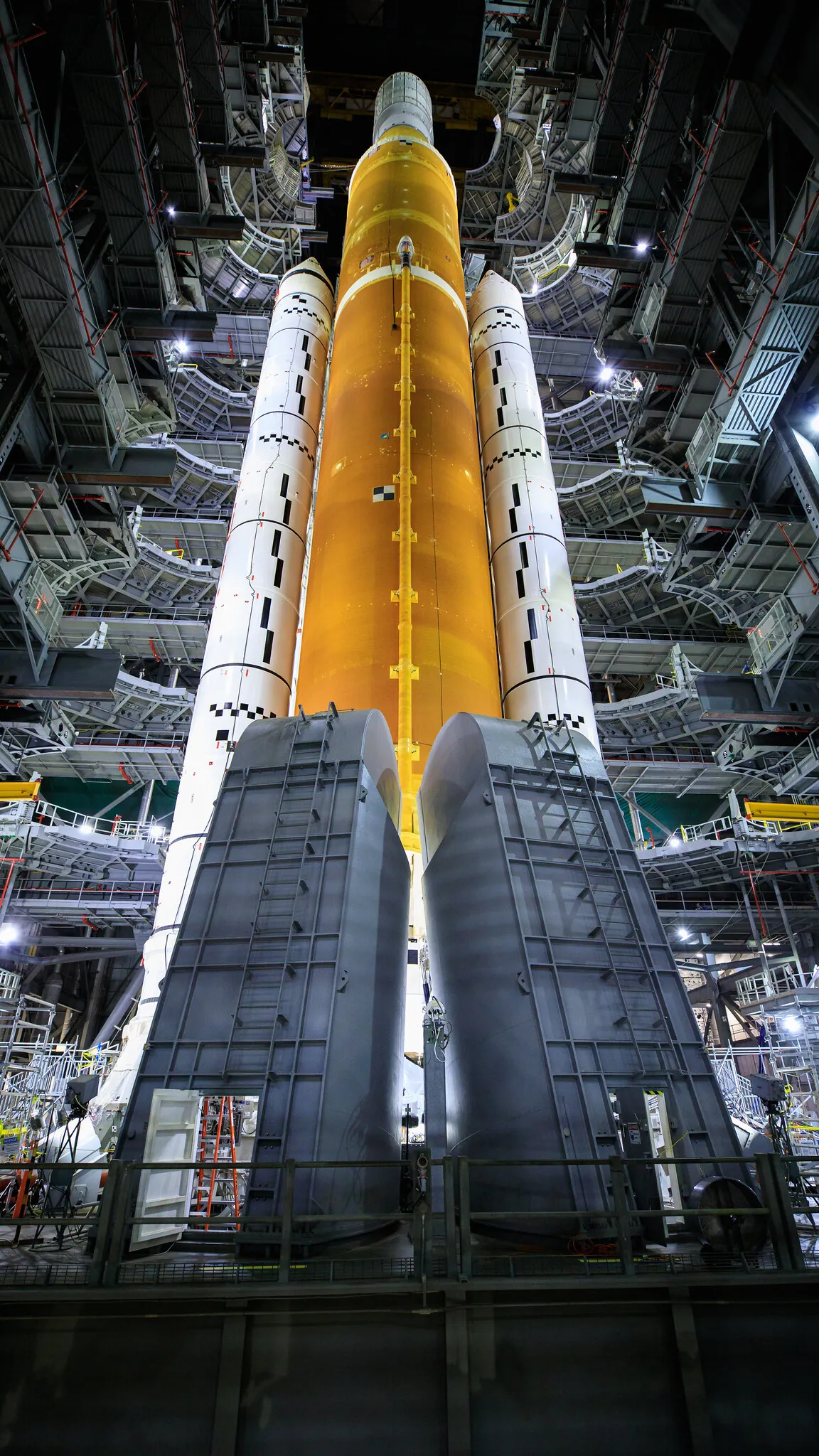
The slow, ceremonial transfer of the Space Launch System (SLS) rocket from the Vehicle Assembly Building to the launch pad at Kennedy Space Center marked the beginning of the visible phase of the final push toward Artemis II. The 98-meter colossus, observed by hundreds of technicians and agency employees, was positioned on the pad after a maneuver that mixes industrial logistics with symbolism: rebuilding crewed human presence around the Moon. Reuters described the operation as an operational milestone, and in the aerospace community it has been interpreted as the step that opens the window for final tests before liftoff.
The purpose of Artemis II is simple in its statement and complex in its execution: to take four astronauts on a ten-day lunar orbit to validate habitation systems, navigation, and logistics associated with the new cycle of lunar missions. Although the mission will not land on the surface, its success is crucial for Artemis III and plans for sustained return to the Moon. Controllers and technical officials have emphasized that the move to the pad does not eliminate risks; on the contrary, it activates an extensive list of verification items, from the propulsion system to structural integrity against vibrations and environmental conditions.
Technicians consulted on the pad have said that attention now focuses on the general fueling rehearsal, the so-called "wet dress rehearsal", and the pad abort sequence. Any findings in these tests can translate into delays to make indispensable safety adjustments. The placement on the pad also revives the debate about SLS costs and schedules versus commercial alternatives; satellites and industry observers follow the case not only for its scientific value, but for the industrial impact of reactivating crewed lunar flights after decades.
If everything goes according to the tests, Artemis II will aim to break records for distance and complexity of human involvement around the Moon; if failures emerge, the operation will demonstrate that, on the space frontier, technical patience is as essential as political ambition.
The most important news while you enjoy a cup of coffee.
Join our community. Get our exclusive weekly analysis before anyone else.
Related News

TecnologíaGlobal
5 min read
NASA confirms the date and menu for Artemis II
The Orion spacecraft has no refrigerator or resupply. That's why NASA designed 189 unique items, amaranth as protein, five types of hot sauce, and 43 cups of coffee for 10 days around the Moon.

TecnologíaDinero
5 min read
Meta lays off 16,000 people. Its stock rises 3%
Reuters confirmed plans to cut up to 20% of Meta's workforce. Wall Street celebrated the news with a 3% surge. In 2026, AI already justifies 55,775 layoffs in the tech sector.

Tecnología
6 min read
AI already solves centuries-old math. What your bank encrypts is being rebuilt from scratch.
AlphaEvolve surpassed any known human solution in 20% of 67 open mathematical problems. At the same time, the RSA encryption that protects banks and government networks has been in the process of replacement for months. Two converging transformations.


