Technology•6 min read
Latin American Startups Embrace AI Agents to Tackle Cost Pressure

Automation has ceased to be the exclusive privilege of corporations that can afford McKinsey consultants billing $500 an hour. For Latin American startups, especially those operating on tight budgets in fragmented markets,integrating artificial intelligence agents is not an innovative strategic decision but a matter of basic survival. Either you automate repetitive processes that devour time and money, or you hire more people and watch your financial runway evaporate within six months. The equation is brutally simple.
The startup ecosystem in Latin America faces a structural paradox: companies need to scale quickly to compete with better-funded global players, yet they operate with resources that barely keep the lights on. The answer many are finding is to replace human labor with automated systems based on AI agents that execute tasks without salaries, without benefits, and without the right to vacation. The description sounds dystopian because it is, but it works. And in markets where the margin for error is nonexistent, what works wins.

The Death of the Traditional Services Model
Companies offering traditional services, digital marketing, web design, social media management,are discovering that their business model has an expiration date stamped on it. Every new client requires proportional man-hours. Double the clients and you double the staffing costs. Growth is linear, margins are constantly squeezed by price competition, and eventually you reach the point where working more hours generates not more profit but simply more burnout. It is an economic trap disguised as entrepreneurship.
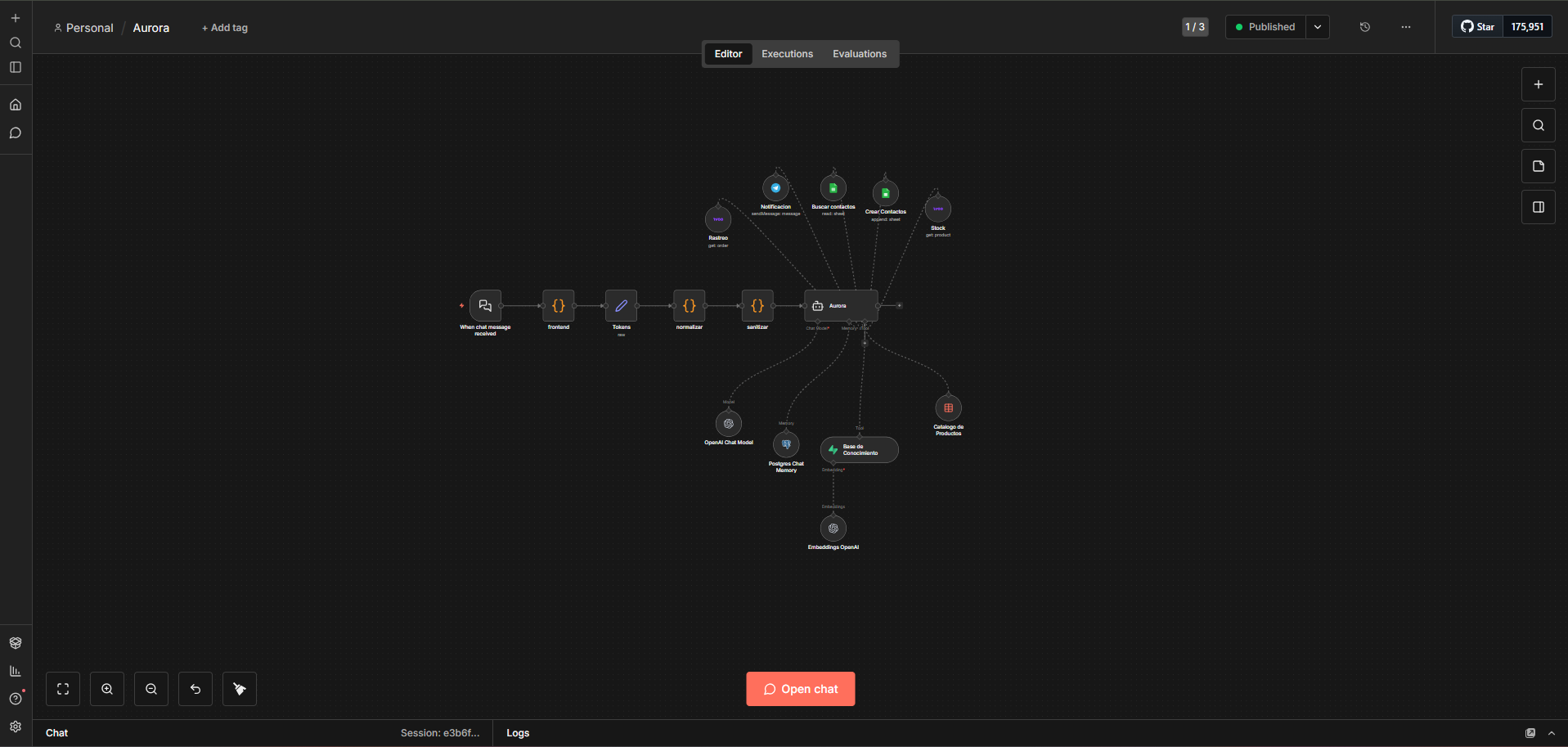
Intelligent automation changes the rules of the game entirely. An AI agent can handle 50 customer service conversations simultaneously without losing patience. An automated system can generate advertising performance reports every hour without complaining about workload. A chatbot can qualify sales leads 24/7 without asking for a raise. The competitive advantage no longer lies in hiring the best human talent but in designing the best automation architecture that makes that talent obsolete.
Gazu Technology and the Inevitable Pivot
Gazu Technology, a Colombian company that started by offering the conventional digital services that every Latin American agency provides, perfectly exemplifies this transition. The company understood that competing in the "we'll build your website" market was a race to the bottom where the winner is simply whoever charges less before going bankrupt. So it pivoted toward selling automation solutions and AI agents, becoming a supplier of the very tools that are killing traditional agencies.

The move is smart but also pragmatic to the core. If you know your current business model is doomed, it is better to be the one who destroys it and captures the value of its replacement than to wait for someone else to do it. Gazu Technology now sells chatbots, automated sales assistants, self-optimizing advertising pipelines, and intelligent reports that process data without human intervention. It is essentially the same value they offered before, but packaged in software that scales infinitely without increasing costs.
The Promise vs. the Reality of AI Agents
The narrative sold by companies offering AI automation solutions is always the same: free human talent from repetitive tasks so it can focus on high-value creative and strategic work. It sounds beautiful. The reality is less romantic: in many cases, the "human talent" is simply laid off because the AI agent does the job well enough for the company to save the full cost of payroll.

Current AI agents are not general superintelligences. They are conversational interfaces connected to APIs from services like OpenAI, Anthropic, or Google, configured for specific use cases through basic prompt engineering. They solve structured and repetitive problems with surprising efficiency, but fail catastrophically when faced with situations requiring complex contextual judgment, genuine empathy, or non-algorithmic creativity. The problem is that 70–80% of the work in many startups consists of exactly those structured and repetitive tasks that agents can execute perfectly.
The Target Market: SMEs Desperate for Competitive Advantage
Small and medium-sized Latin American businesses are the perfect target market for these automation solutions. They don't have the budget to hire in-house AI development teams. They can't afford international consulting firms. But they desperately need to automate processes to compete with larger companies that already have. And they are willing to pay accessible prices for solutions that, while not technologically revolutionary, solve concrete operational problems.
The value proposition is direct and quantifiable: a company that previously needed three people to manage customer service can reduce that to one person supervising an AI agent that resolves 80% of inquiries automatically. The payroll savings over six months fully pay for the system's implementation. The ROI is obvious. And for the companies selling these solutions, the model allows selling the same configuration to multiple clients with minimal customization, finally approaching the goal of every tech startup: recurring revenue with decreasing marginal costs.
The Elephant in the Room: Technological Unemployment
Nobody in the industry wants to talk openly about the labor consequences of this transformation. But the reality is undeniable: every successfully automated process is a job that disappears. Human virtual assistants who managed calendars and emails are being replaced by AI agents. Community managers who responded to social media comments are being substituted by chatbots configured with the brand's voice. Junior analysts who generated weekly reports are being displaced by systems that produce those same reports automatically every hour.
The standard defense is that automation "frees" these workers to do more valuable things. But that assumes there are enough high-value roles available to absorb all the displaced workers. The evidence suggests the opposite: companies simply operate with smaller teams and increase profits through reductions in labor costs. Automation does not redistribute work, it eliminates it.
The Future: Automate or Die
For Latin American startups operating on limited budgets in highly competitive markets, the decision is binary: adopt intelligent automation and AI agents, or accept that they will eventually be destroyed by competitors who did. There is no romance in this equation. There is no room for nostalgia about traditional business models. The market rewards operational efficiency, and operational efficiency in 2026 means replacing human labor with algorithms whenever it is technically possible and economically advantageous.

Companies like Gazu Technology are not inventing a revolution. They are responding rationally to clear economic incentives: labor costs are high and rising, automation technology is increasingly accessible and effective, and clients are willing to pay for solutions that reduce their own operating costs. It is capitalism functioning exactly as it is supposed to: optimizing resources, eliminating inefficiencies, and concentrating benefits in the hands of those who control the tools of production.
The question is not whether this transformation will happen. It is already happening. The question is what we do with the people whose work is being automated, and whether as a society we have the political will to build safety nets for those left behind in this transition. So far, the answer seems to be a deafening silence.
Sources
The most important news while you enjoy a cup of coffee.
Join our community. Get our exclusive weekly analysis before anyone else.
Related News

TecnologíaGlobal
5 min read
NASA confirms the date and menu for Artemis II
The Orion spacecraft has no refrigerator or resupply. That's why NASA designed 189 unique items, amaranth as protein, five types of hot sauce, and 43 cups of coffee for 10 days around the Moon.

TecnologíaDinero
5 min read
Meta lays off 16,000 people. Its stock rises 3%
Reuters confirmed plans to cut up to 20% of Meta's workforce. Wall Street celebrated the news with a 3% surge. In 2026, AI already justifies 55,775 layoffs in the tech sector.

Tecnología
6 min read
AI already solves centuries-old math. What your bank encrypts is being rebuilt from scratch.
AlphaEvolve surpassed any known human solution in 20% of 67 open mathematical problems. At the same time, the RSA encryption that protects banks and government networks has been in the process of replacement for months. Two converging transformations.


