Technology•15 min read
The apps you use today will be history: 25 AI tools that have already taken over

The apps you use today will be history: 25 AI tools that have already taken over
Multi-agent system adoption grew 327% in four months. That is not an optimistic consulting forecast: it is the pace at which the software you have been paying per seat for years is being displaced by agents that charge when they deliver results.
The model changed at its roots. Intercom Fin charges $0.99 per support conversation resolved without human intervention. Salesforce Agentforce went through three pricing structures in 18 months, $2 per conversation, then Flex credits at $0.10 per action, then $125 per user, because the market still does not know how to buy something that does the work of an entire team. GitHub Copilot responds in agent mode from $10 per month. Gamma builds a full presentation from a paragraph of text for $8 a month.
Software did not die. But the model where you pay for access regardless of whether it works is dying. What follows is the map of the 25 agents leading that substitution, divided into the five niches where the change is already verifiable and has numbers.
Top 5 project management tools: from the board that shows to the agent that decides
The segment where the transition was most visible. The five dominant platforms of 2026 do not compete on who has the cleanest interface: they compete on who automates more steps without asking a human to supervise them.
Wrike was the first to offer a no-code agent builder that lets any manager describe a problem in natural language and get an algorithmic specialist designed to solve it. Its agents emit reasoning logs: they explain what they decided and why, turning the black box into something auditable. It replaces the exhausting cycle of manually updating statuses in Jira or Microsoft Project. Price: free plan for unlimited users; enterprise plans with custom pricing.
Asana stopped selling software licenses. It sells AI "team members" with specific corporate roles, campaign strategist, spec reviewer, that actively join projects, comment in threads, and assist the team without anyone summoning them. AI Studio lets you design intelligent workflows with no code. Price: Free / Starter $10.99/user/month / Advanced $24.99/user/month; AI Studio adds $135/account/month at its basic tier.
ClickUp Brain 4.0 is the intelligence layer that turns the platform into a unified operational brain: it summarizes transcripts, extracts structured data from messy documents, and builds interactive flowcharts. It eliminates the historical need to maintain corporate wikis separate from the task execution tool. Price: Free / $7/user/month (Unlimited) / $12/user/month (Business).
Sidekick from monday.com, an assistant that takes unstructured meeting notes and generates complete project architectures: tasks, dependencies, timelines, and assignments. What used to require two hours of manual planning in Basecamp or Gantt sheets happens in minutes. Price: free plan available; Basic from $9/user/month.
ServiceNow Virtual Agent operates in the most demanding terrain: corporate ITOps under ITIL regulation. It resolves internal support tickets, manages security patches, and diagnoses hardware failures without escalating to a human Level 1 technician. No flashy interface. It just works. Price: enterprise quotation integrated into the Now AI platform.
| Tool | Core functionality | Pricing |
|---|---|---|
| Wrike | No-code agent builder; agents with auditable reasoning logs that automate updates and decisions. | Free plan for unlimited users; enterprise plans with custom pricing. |
| Asana | AI "team members" with corporate roles (strategist, reviewer, etc.) that actively join projects; AI Studio for no-code workflow design. | Free; Starter $10.99/user/month; Advanced $24.99/user/month; AI Studio from $135/account/month (basic tier). |
| ClickUp | "Operational brain" layer: summarizes transcripts, extracts structured data, and generates interactive flowcharts; unifies documentation and execution. | Free; $7/user/month (Unlimited); $12/user/month (Business). |
| Sidekick | Takes unstructured notes and generates project architectures: tasks, dependencies, timelines, and auto-assignments. | Free plan available; Basic from $9/user/month. |
| ServiceNow | Virtual Agent for ITOps: ticket resolution, patch management, and automated diagnosis in regulated environments (ITIL). | Enterprise quotation integrated in the Now AI platform (custom pricing). |
Top 5 software development tools: the cycle that used to take weeks now takes hours
95% of developers use AI tools weekly. 75% apply them to more than half their work. The question is no longer whether to adopt; it is which one and for which exact task.
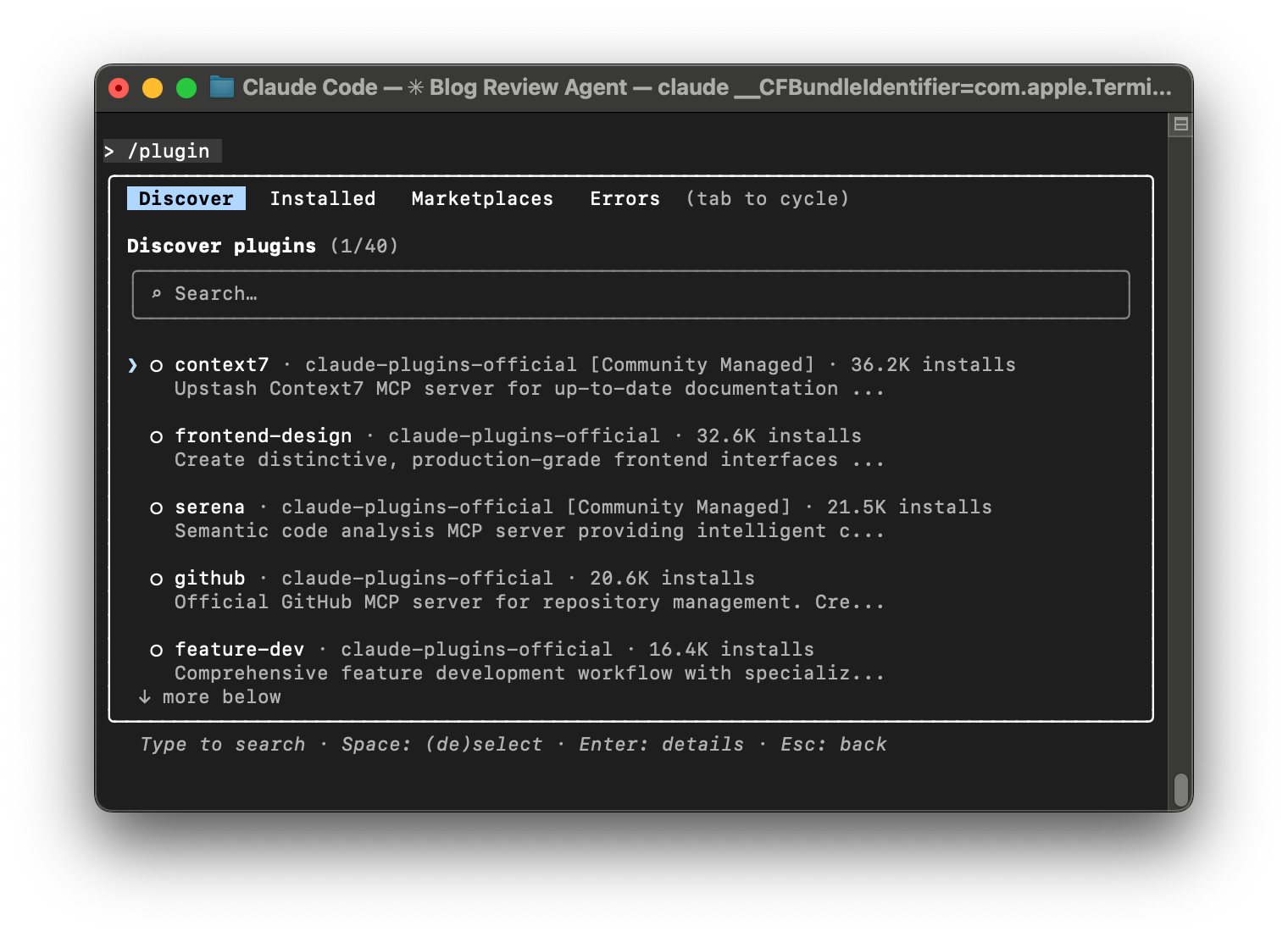
Claude Code led the ranking of "most loved" developer tools in 2026 with 46%, versus 19% for Cursor and 9% for GitHub Copilot. It is not an IDE extension: it controls the desktop directly, sees the screen, operates keyboard and mouse, and executes engineering tasks in multi-agent configurations that exceed 45 minutes of uninterrupted work. It went from zero to that position in eight months. Price: via Anthropic API by token consumption; up to 5x cost difference between Sonnet and Opus models depending on usage intensity.
Cursor AI displaced Visual Studio Code for developers who want an editor built from scratch for the generative era. Its Agent Mode refactors entire repositories simultaneously, understanding architecture holistically. The developer levels up: instead of writing repetitive syntax, they focus on structural decisions. Price: free with limitations / Pro $20/month (500 fast requests with premium models).
GitHub Copilot is the most adopted in corporate environments thanks to the Microsoft ecosystem and its strict enterprise data isolation. It evolved from autocomplete to full workspace agents. Its real advantage is not technical: it is that it is already where developers are. Price: Free (2,000 completions + 50 chats/month) / Pro $10/month / Business $19/user/month / Enterprise $39/user/month.
Amazon Q Developer dominates the modernization of legacy systems written in Java or .NET in AWS ecosystems. It refactors autonomously and replaces the work that armies of migration consultants used to do. Its bias toward AWS services can be its biggest strength or its biggest limitation, depending on each team's ecosystem. Price: free tier for individual developers; enterprise volume pricing plans.
CodeGPT is the option for environments where data sovereignty is non-negotiable, governmental, military, financial, with local model support and BYOK scheme. Its visual knowledge graph maps code dependencies with instant visibility, replacing technical debt analysis tools that cost ten times more. Price: free tier available; paid plans with local model from approximately $9.99/month.
| Tool | Core functionality | Pricing |
|---|---|---|
| Claude Code | Desktop control and multi-agent for long tasks: operates keyboard/mouse, runs engineering workflows, and performs uninterrupted work; leads in developer preference. | Via API by token consumption; variable cost by model (Sonnet vs Opus, up to 5× difference). |
| Cursor (Cursor AI) | Editor built for the generative era with Agent Mode that refactors complete repositories and understands holistic architecture. | Free with limitations; Pro $20/month (500 fast requests with premium models). |
| GitHub Copilot | Full workspace agents integrated in the Microsoft ecosystem; strong isolation and corporate adoption. | Free (2,000 completions + 50 chats/month) / Pro $10/month / Business $19/user/month / Enterprise $39/user/month. |
| Amazon Q Developer | Autonomous modernization of legacy systems (Java/.NET) and refactoring oriented to AWS ecosystems. | Free tier for individual developers; enterprise volume plans (pay per use). |
| CodeGPT | Focus on data sovereignty: local model support (BYOK), visual dependency graph, and on-prem deployments for regulated sectors. | Free tier available; plans with local option from approx. $9.99/month (pricing varies by deployment). |
Top 5 finance and data tools: from the dashboard that shows the problem to the agent that investigates it
The bifurcation that defines the niche in 2026 is simple: Tableau and Power BI answer "what happened." Tellius investigates "why it happened" and does so without anyone asking.
Tellius operates at Analytics Level 4. It monitors KPIs around the clock and, upon detecting an unexpected variation, launches an autonomous investigation: it breaks down the change by drivers, crosses structured data with unstructured context, and delivers a complete explanatory executive narrative. It replaces the reactive cycle of asking an analyst to write SQL to discover anomalies that already occurred. Price: custom enterprise quotation.
Beam AI solves one of the sector's biggest pain points: the maintenance trap. Previous systems required constant reprogramming when processes changed. With Self-Learning 2.0 architecture, its agents refine their own logic based on past results. They achieve over 99% accuracy in complex accounting reconciliations, saving more than 40 hours per week per department. Price: custom enterprise plans.
Lunos AI transforms B2B accounts receivable. When a customer replies to an email saying they will pay in installments due to an invoice dispute, the agent reads the natural language, stops the automated reminder sequence, and instantly recalculates cash flow forecasts. The AR modules of any traditional ERP do not process that kind of nuance. Price: custom quotation by volume.
Vic.ai automates accounts payable intake at scale: it extracts invoice data, codes to cost centers based on the organization's history, and flags anomalies before they reach the accountant. The role changes: from data processor to reviewer of already-identified exceptions. The work that used to occupy the first years of a junior financial professional was absorbed. Price: by volume of processed invoices.
Datarails / Cube do not kill Excel. They wrap it. They connect the familiar spreadsheet interface to live databases, ERPs, and HR systems on the backend, with automatic version control and natural language scenario modeling. The "version chaos" with corrupted formulas and inconsistent local models has a solution without abandoning the environment that FP&A teams have known for decades. Price: Datarails from $2,000/month for small teams; Cube with custom pricing.
| Tool | Core functionality | Pricing |
|---|---|---|
| Tellius | Analytics Level 4: 24/7 monitoring and autonomous anomaly investigation (driver decomposition + executive narrative). | Custom enterprise quotation. |
| Beam AI | Self-learning agents that refine logic by results; high accuracy in accounting reconciliations and reduced rework. | Custom enterprise plans (quotation). |
| Lunos AI | Automates B2B accounts receivable: reads customer replies, pauses sequences, and recalculates forecasts in real time. | Custom quotation by volume/use. |
| Vic.ai | Massive automation of accounts payable: invoice extraction, automatic coding, and exception detection. | Price by volume of processed invoices. |
| Datarails / Cube | Excel wrapper: connection to live ERPs and DBs, version control, and natural language modeling (keeps spreadsheet interface). | Datarails from $2,000/month for small teams; Cube with custom pricing. |
Top 5 sales and support tools: the decision tree no longer makes the decisions
The most customer-facing transition: from the bot that reads menu options to the agent that understands frustration, adapts tone, and resolves without escalating.
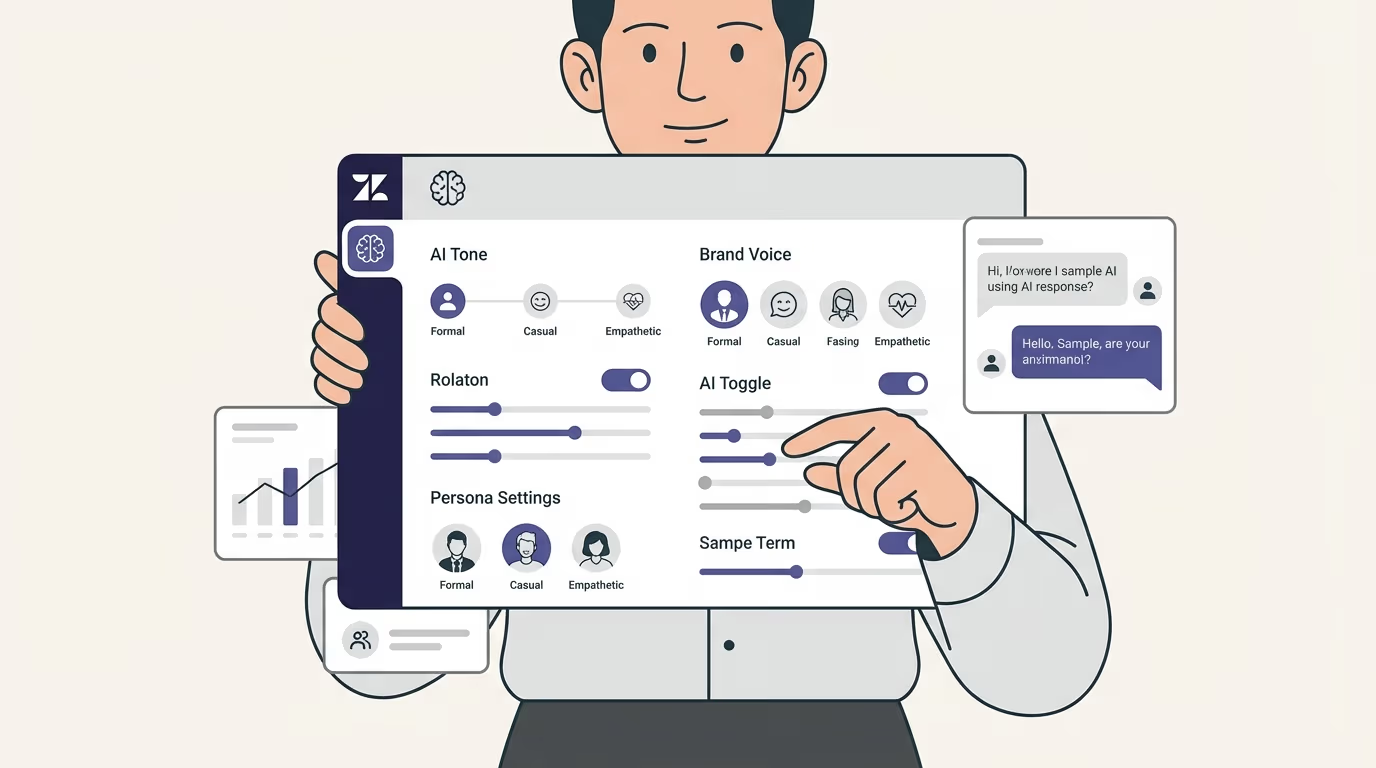
Salesforce Agentforce 3.0 automates 85% of Level 1 support and 60% of routine sales follow-up. Its self-repairing workflows correct CRM errors in real time without throwing failures at the user. The fact that Salesforce tried three different pricing models on the same product in 18 months, $2 per conversation, then Flex credits at $0.10 per action, then $125/user/month, does not speak to internal disorganization. It speaks to the market still negotiating how to pay for digital work that humans used to do. Current price: $2/conversation or Flex credits ($0.10/action) or from $125/user/month; Service Cloud Enterprise from $165/user/month.
Intercom Fin lives inside the customer's application, not in an external help portal. It detects where users experience friction and offers predictive help before they ask for it. It resolves 66% of queries without human intervention, with that percentage growing one point monthly since launch. Price: $0.99/resolution (standalone, minimum $49.50/month equivalent to 50 resolutions).
Sierra specialized in replacing IVR systems, those telephone menus of "press 1 for sales, 2 for support," with empathetic voice agents that resolve unstructured queries simulating human conversation. It reached $150 million ARR in 21 months, with 50-90% of customer service interactions fully automated according to its own customers. Price: enterprise quotation; $10 billion valuation.
Zendesk AI acts as orchestrator over existing infrastructure rather than replacing it. It routes tickets by customer sentiment and available agent skill, not just keywords, proactively flagging the most frustrated users for priority attention. Price: from $1.50/autonomous resolution; Suite plans from $55/agent/month.
Ada lets non-technical teams build complex omnichannel agents through a visual no-code interface, supporting more than 50 languages. It connects to CRM, billing, and order management to complete actions directly, processing refunds, updating accounts, canceling subscriptions, instead of just answering questions. Price: custom quotation by resolution volume.
| Tool | Core functionality | Pricing |
|---|---|---|
| Salesforce (Agentforce 3.0) | Automates Level 1 support and sales follow-up; self-repairing workflows that correct CRM errors in real time. | $2/conversation; Flex credits ($0.10/action); or from $125/user/month; Service Cloud Enterprise from $165/user/month. |
| Intercom (Intercom Fin) | Agent embedded inside customer app that detects friction and offers predictive help; resolves ~66% of queries without human. | $0.99/resolution (standalone); minimum $49.50/month (50 resolutions). |
| Sierra | Replaces IVR with empathetic voice agents for unstructured interactions; high automation of service interactions. | Enterprise quotation (custom pricing). |
| Zendesk (Zendesk AI) | Orchestrator over existing infrastructure: routing by sentiment and agent skill; prioritizes frustrated users. | From $1.50/autonomous resolution; Suite plans from $55/agent/month. |
| Ada | No-code platform to build omnichannel agents that execute backend actions (refunds, cancellations, etc.). | Custom quotation by resolution volume. |
Top 5 content and personal productivity tools: the two-speed pipeline
The cognitive workflow of 2026 split into two distinct phases: strategic thinking and context gathering come first (upstream); execution and deliverable production come after (downstream). Tools that do not fit that framework collect dust.
HaloMate Pro solves the biggest flaw of traditional chatbots: session amnesia. It maintains persistent context across projects, remembers the user's working style, and lets you simultaneously query multiple language models within the same interface to get "second opinions" without re-pasting context. It replaces Evernote, fragmented notes, and disconnected instances of conversational assistants. Price: individual subscription plans from approximately $20/month.
Google Imagen 3 dominates high-fidelity photorealistic composition: it processes multiple reference images simultaneously, applies precise style transfer, and renders text within images with advertising-grade accuracy. For marketing teams and art directors, it replaces days of manual masking in Photoshop. The visual reasoning model in "Thinking" mode allows iteration in real time without restarting the base image. Price: integrated in the Google ecosystem; access via Google One AI Premium from $19.99/month.
Gamma turns the process of creating presentations into something that respects how humans think: draft, iterative feedback, structural rewrite. The agent reconstructs the design when you change the argumentative flow without text colliding. Over 70 million users, $100 million ARR, $2.1 billion valuation. Price: Free (400 AI credits) / Plus $8/month annual or $10/month / Pro $15/month annual or $20/month / Ultra $90/month annual.
Canva AI has the most direct proposition: eliminate blank canvas paralysis. Its agents generate designs consistent with brand identity in seconds and automatically adapt dimensions for different publishing platforms. 65% of its users are micro-businesses and SMEs operating without an in-house designer. Price: Free / Pro $15/month or $120/year / Teams from $10/user/month (minimum 5 users).
CapCut Pro democratized structural video editing for short formats. Automatic rhythm cuts based on the audio waveform, silence removal, and kinetic subtitling with near-perfect phonetic accuracy. It replaces Adobe Premiere for the attention economy that dominates digital consumption in 2026: vertical, fast, retention-optimized content. Price: Free / Standard $9.99/month / Pro from $9.99/month or $89.99/year.
| Tool | Core functionality | Pricing |
|---|---|---|
| HaloMate (HaloMate Pro) | Persistent context across sessions; maintains user style and allows using multiple models for "second opinions." | Individual subscription from ≈ $20/month. |
| Google (Imagen 3) | Photorealistic composition and style transfer; visual reasoning in "Thinking" mode for real-time iteration. | Integrated in Google ecosystem; access via Google One AI Premium from $19.99/month. |
| Gamma | Generates fluid presentations that restructure when the narrative changes; supports draft → iteration → redesign. | Free (400 AI credits); Plus $8/month (annual) / $10/month; Pro $15/month (annual) / $20/month; Ultra $90/month (annual). |
| Canva (Canva AI) | Generates brand-consistent designs and automatically adapts dimensions for different platforms. | Free; Pro $15/month (or $120/year); Teams from $10/user/month (min. 5 users). |
| CapCut (CapCut Pro) | Video editing for short formats: automatic cuts by audio, silence removal, and kinetic subtitling. | Free; Standard $9.99/month; Pro from $9.99/month or $89.99/year. |
The risk nobody mentions in sales materials
There is a data point that appears in none of these platforms' demos: barely one in five companies deploying AI automation today has a mature governance framework to manage it.
Autonomous agents can get trapped in recursive loops, trying to resolve an ambiguity with no human in the process, and drain massive cloud token quotas. The economic damage can escalate exponentially in minutes. The solution already has a name in the most advanced engineering teams: "watchdog" agents that monitor executor behavior and send termination signals before the cost spiral takes off.
We are still paying for software that does not ask whether it works. AI charges when it does. The market has not yet finished processing what that implies for the margins of companies selling the former.
Sources
The most important news while you enjoy a cup of coffee.
Join our community. Get our exclusive weekly analysis before anyone else.
Related News

TecnologíaGlobal
5 min read
NASA confirms the date and menu for Artemis II
The Orion spacecraft has no refrigerator or resupply. That's why NASA designed 189 unique items, amaranth as protein, five types of hot sauce, and 43 cups of coffee for 10 days around the Moon.

TecnologíaDinero
5 min read
Meta lays off 16,000 people. Its stock rises 3%
Reuters confirmed plans to cut up to 20% of Meta's workforce. Wall Street celebrated the news with a 3% surge. In 2026, AI already justifies 55,775 layoffs in the tech sector.

Tecnología
6 min read
AI already solves centuries-old math. What your bank encrypts is being rebuilt from scratch.
AlphaEvolve surpassed any known human solution in 20% of 67 open mathematical problems. At the same time, the RSA encryption that protects banks and government networks has been in the process of replacement for months. Two converging transformations.


