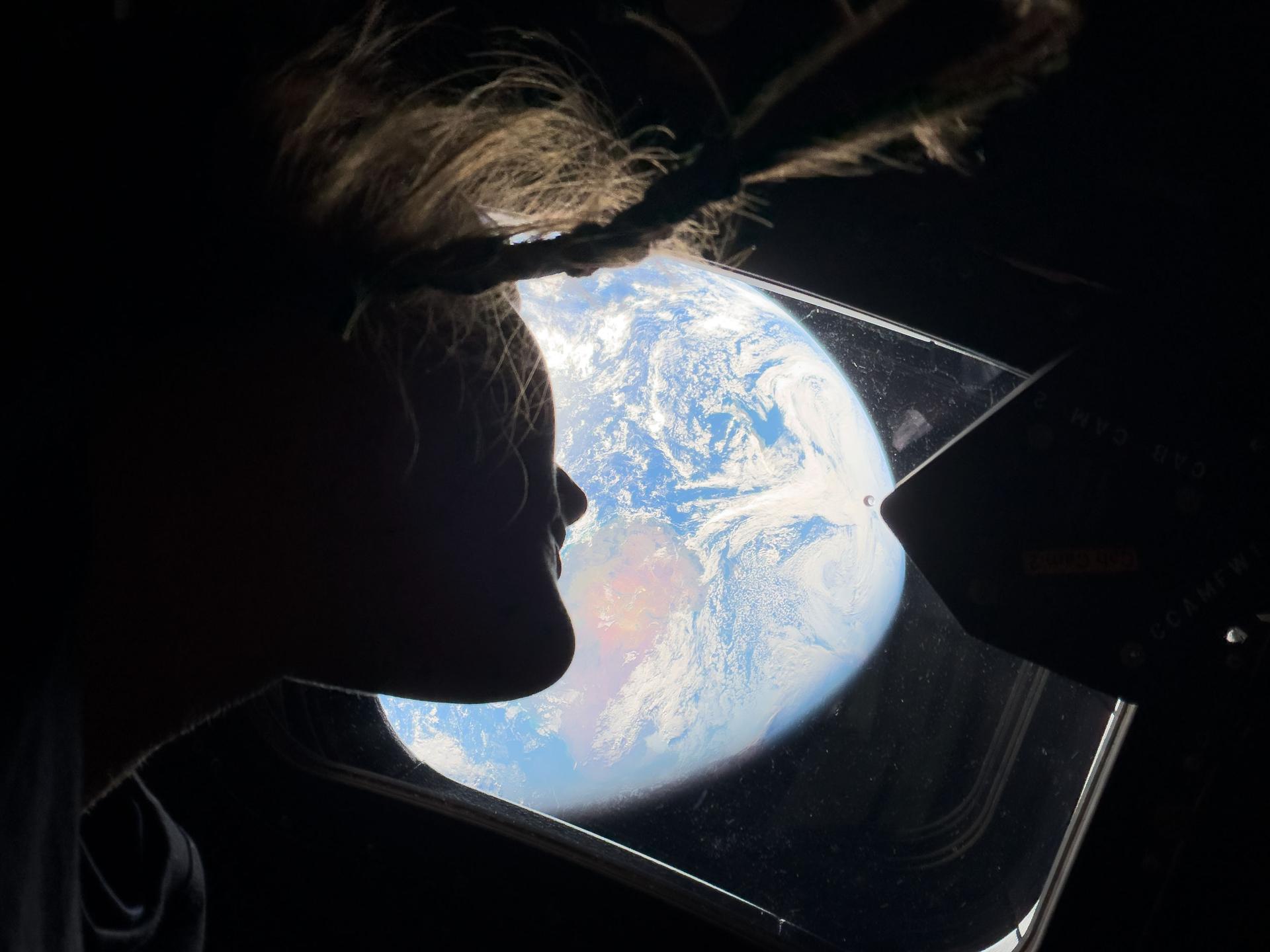
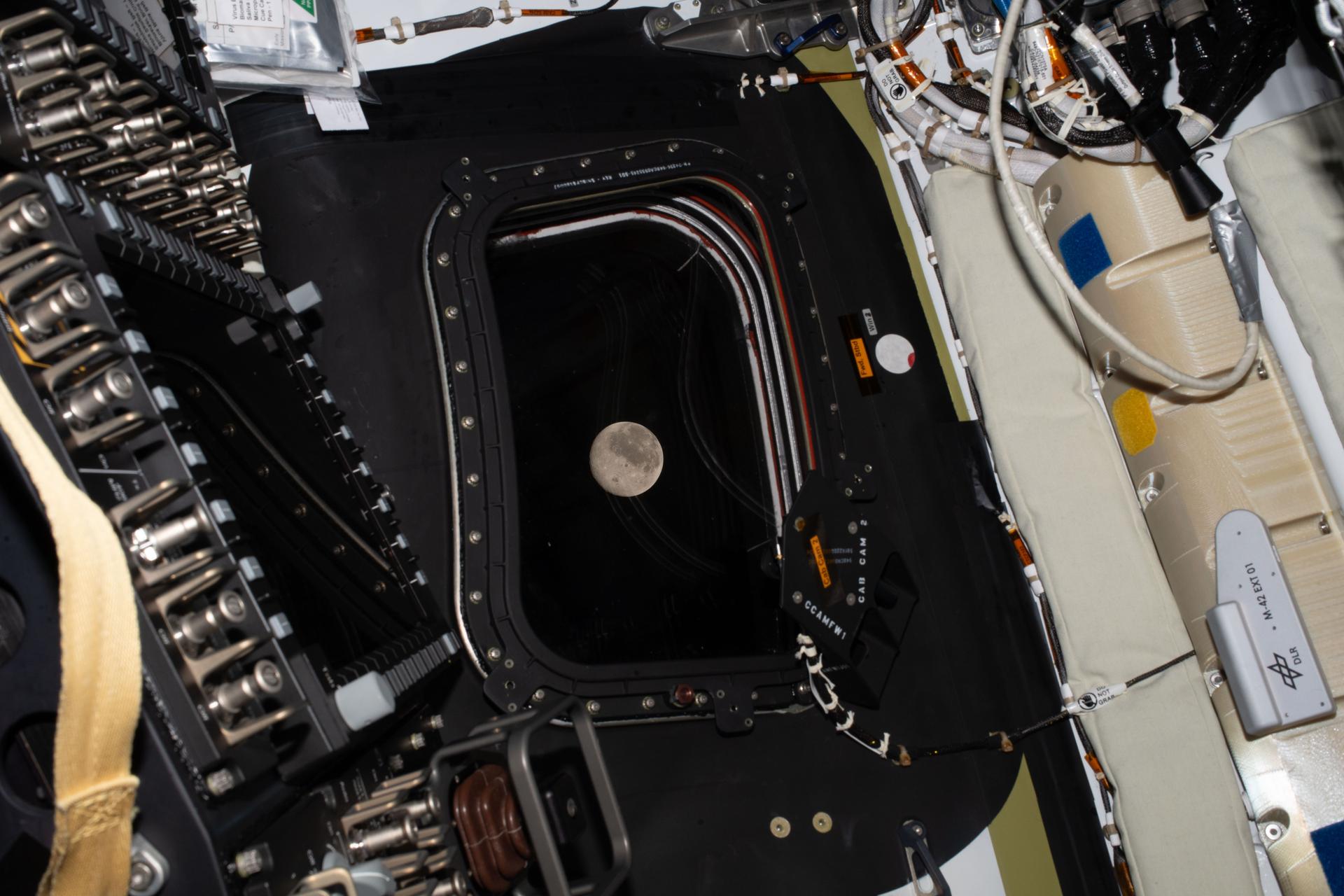
Today, in the Artemis II mission, the Orion capsule crossed into the lunar gravitational sphere of influence: the threshold where the Moon's pull exceeds that of the Earth. The spacecraft is 65,235 miles from the satellite. This April 6, at 2:45 p.m. ET, four people will look out Orion's windows at the far side of the Moon from closer than any human being in 54 years.
Fifty-four years without human witnesses of the dark side.
The lunar flyby no one has done since Apollo 17
On Monday, Orion will pass about 4,600 miles above the lunar surface on a free return trajectory, the same orbital mechanics that guarantee that, even if all its engines failed, the spacecraft would return alone to the Earth's atmosphere. There is no moon landing. There is no docking with anything. Just four people observing, photographing and describing in real time what they see.
But the record they will break is no minor feat. Orion will reach a maximum distance of 252,021 miles from Earth, surpassing the 248,655 miles of Apollo 13 in 1970 by 3,366 miles. The previous record was set by a crew that survived an accident. This one is set by a mission that, for now, is going according to plan.
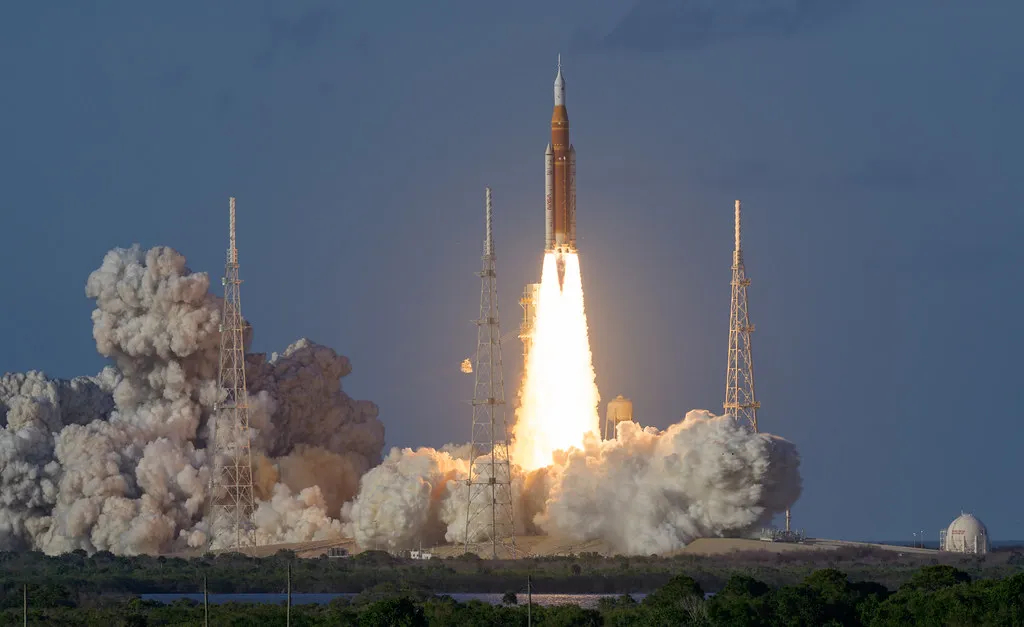
The week began on April 1 with the launch from Complex 39B at the Kennedy Space Center, the first since 2006. The SLS rocket lifted off on the first attempt, almost at the beginning of the two-hour window. Space launch veterans know that doesn't happen routinely. Pilot Victor Glover confirmed it from space the next day: "We like to say we are prepared without having expectations. But, deep down, you hope to be able to lift off."
Five days: what was tested and what already worked
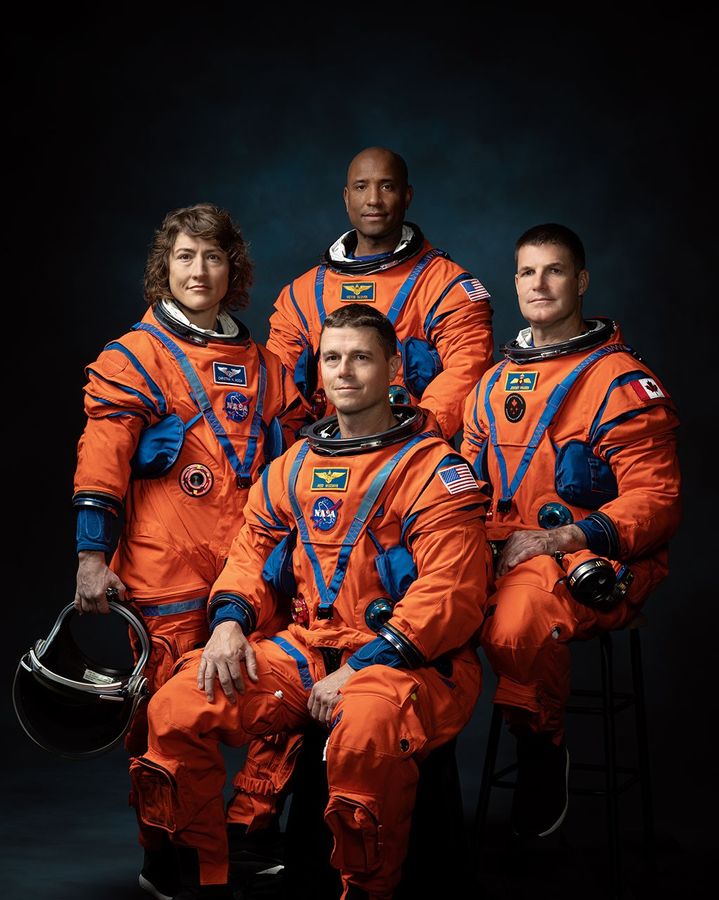
On April 2, Orion's main engine fired for 5 minutes and 55 seconds to execute the Trans-Lunar Injection maneuver. At that moment, Reid Wiseman, Glover, Christina Koch and Canadian Jeremy Hansen became the first human beings to leave Earth's orbit since Apollo 17. NASA canceled the first trajectory adjustment scheduled for Day 3 because the injection was so precise there was nothing to correct.
A trajectory correction that is not needed is, in aerospace engineering jargon, the best possible outcome.
On Day 4, Koch took the controls of the spacecraft in deep space alongside Hansen for 41 minutes. They tested two piloting modes: full six-degrees-of-freedom control—simultaneous translation and rotation in all three axes—and attitude control restricted to three degrees. The data they collected will define future dockings with SpaceX and Blue Origin landers, without which Artemis III does not exist.
On Day 5, the crew woke up to CeeLo Green’s "Working Class Heroes" played by Mission Control and proceeded to put on their survival suits for the pressurization and leak check test. They also received a message from Apollo 16 astronaut Charlie Duke, one of the twelve men who walked on the Moon. The generational distance between those who walked on it and those who now only circle it reflects something about the history of the space program that doesn't need to be explained.
Why the far side matters beyond the photo
Monday's flyby has a specific scientific agenda. The Orientale basin, one of the most studied multi-ring impact craters in the solar system, already appeared in the photographs of Day 4. The science team in Houston has already sent the list of observation targets: reliefs, slopes, crater rims that under lateral lighting reveal a depth that overhead photography never captures. The crew will photograph and describe for six hours. Afterwards, Orion will begin its return.
What deserves attention is the structural context of all this. Artemis II is not going to the Moon to stay. It won't touch its surface. It is, technically, a test flight. And tomorrow it will star in the most significant human exploration event since Gene Cernan climbed into the descent module on December 14, 1972, and Apollo closed.
NASA spent more than $90 billion over two decades to build the SLS and Orion. And its first crewed flight does exactly what Apollo 8 already did in 1968: orbit the Moon, look, and return. The institutional argument is that this time they will stay later, that Artemis IV will take people to the surface, that there will be a lunar base. It may be true. What is certain is that tomorrow, four people will see something no one has seen for over half a century.
Chinese pressure and the urgency scientific interest would never have generated
The last time humans saw the far side of the Moon was Apollo 17, December 1972. After Cernan, Schmitt and Evans returned, the program was canceled. There was no money, no political will, no urgency. Nixon signed the budget that closed the chapter.
Fifty-four years later, the urgency is named China. The China National Space Administration has plans for a crewed lunar landing by the end of this decade. Artemis IV, the program's first moon landing mission, is scheduled for 2028. Competition, as in 1969, works as a budgetary accelerator in a way that scientific curiosity alone would never have achieved.
The details the press releases don't mention
A small detail that reveals something about the real logistics of deep space: during the first days of the mission, the interior temperature of the Orion capsule turned out to be considerably colder than expected. Glover commented that he wished they had brought warmer sleeping bags. Mission Control is working to adjust the cabin.
Aboard the most advanced spacecraft ever built to carry humans into deep space, the astronauts are cold.
The toilet also temporarily stopped working during Day 4. It was repaired before Day 5 and NASA confirmed that operations returned to normal. The fact that both problems exist and have been publicly documented is, paradoxically, a sign that the test flight is fulfilling its function: finding the flaws before they fail on a mission where there is no margin.
What remains to be confirmed
The flyby lasts six hours. Then, Orion begins its journey back. The splashdown in the Pacific Ocean off San Diego is scheduled for Friday, April 10, with the USS John P. Murtha waiting.
Before that, it will have to be confirmed if the heat shield holds up. Following Artemis I in 2022, NASA detected unexpected erosion in the capsule's ablative material, deeper than models predicted. Reentry at over 25,000 miles per hour, with outside temperatures hotter than the surface of the Sun, will provide the definitive answer.
Today they will see the far side of the Moon. On Friday we will know if they can return.