Technology•3 min read
Elon Musk Changes Plans: SpaceX Will Build a Moon City Before Colonizing Mars

Elon Musk Prefers the Moon Over Colonizing Mars
Elon Musk just rewrote the script of space exploration. The SpaceX founder announced that his company will prioritize building a city on the Moon instead of being obsessed with Mars. The reason is brutally pragmatic: reaching the Moon takes just two days, while the trip to the red planet consumes six months of life and resources. Additionally, launch windows to the Moon open approximately every ten days, making Earth's satellite a much more accessible and frequent target.
Musk laid out his arguments in a series of public statements where he emphasized that a lunar settlement could materialize in less than a decade, while colonizing Mars remains a gamble that would take "more than 20 years" according to NASA's most optimistic projections. The strategy shift doesn't mean abandoning the Martian dream, but recognizing that the Moon can serve as a laboratory, testing ground, and logistical springboard for more ambitious missions.
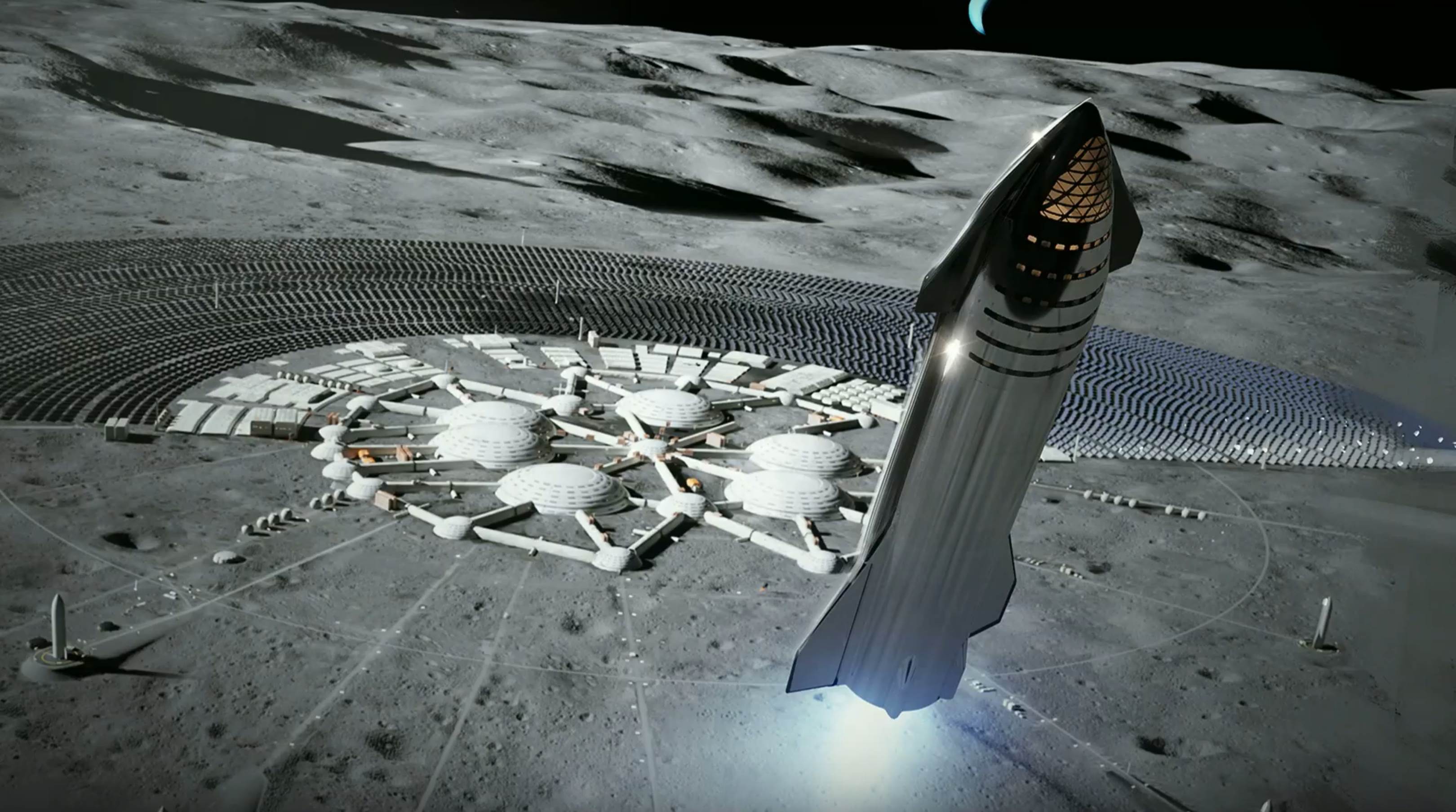
The Moon as a Base of Operations
Musk's central argument is that lunar proximity allows rapid iterations: you can send modules, test technologies, correct errors, and try again in a matter of weeks, not years. Mars, by contrast, demands perfect planning because each mistake costs months of waiting until the next launch window. "If something fails on the Moon, you fix it in days. If it fails on Mars, you wait two years," explained a SpaceX spokesperson in an official statement.
The proposal includes residential infrastructure, exploitation of lunar resources (frozen water in polar craters, regolith for fabrication), and the possibility of using the Moon as a refueling station for future deep space missions. SpaceX is already working on Starship variants adapted for repeated lunar landings, aiming to establish constant supply lines for cargo and crew.
Debate Over Funding and Priorities
The announcement reignited the eternal debate about space objectives and where to direct billions of dollars in investment. NASA has historically maintained a dual approach: the Artemis program seeks to return humans to the Moon as a prelude to Mars, but the agency has never explicitly declared it will build lunar cities before setting foot on the red planet. Musk, however, is playing his own game with private capital and government contracts.
Scientific sectors applaud the logic: the Moon offers a less hostile training ground than Mars (lunar gravity is 1/6 of Earth's vs. 1/3 Martian, lower radiation due to proximity with Earth for emergency evacuations, real-time communication). However, critics warn that concentrating on the Moon could indefinitely delay the Martian mission that Musk has sold for years as humanity's ultimate destination.
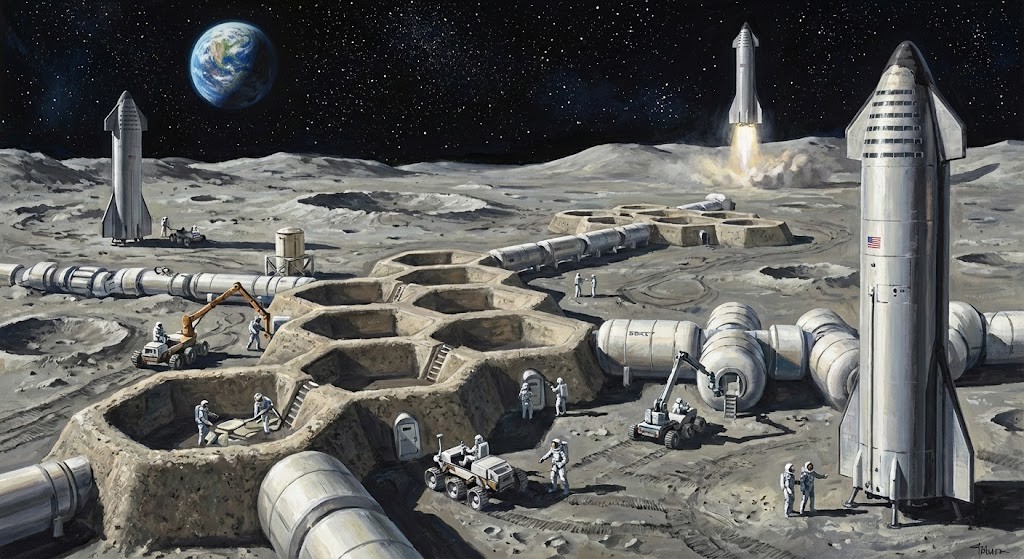
For now, SpaceX is working on refining its propulsion, landing, and life support systems. The company has not detailed exact budget or definitive timeline, but Musk insists that "less than 10 years" is feasible if launches remain constant and technology doesn't fail catastrophically. What once seemed like science fiction now has a tentative date: a city on the Moon before 2036.
The strategic shift also reflects business maturity. Musk understands that Mars remains the ultimate trophy, but the Moon is the profitable business in the short term. Space tourism, mining, scientific research, and military contracts find in the Moon a more marketable scenario than the Martian desert. While humanity dreams of the red planet, Musk bets on monetizing the gray satellite that was always 380,000 kilometers away.
The most important news while you enjoy a cup of coffee.
Join our community. Get our exclusive weekly analysis before anyone else.
Related News

TecnologíaGlobal
5 min read
NASA confirms the date and menu for Artemis II
The Orion spacecraft has no refrigerator or resupply. That's why NASA designed 189 unique items, amaranth as protein, five types of hot sauce, and 43 cups of coffee for 10 days around the Moon.

TecnologíaDinero
5 min read
Meta lays off 16,000 people. Its stock rises 3%
Reuters confirmed plans to cut up to 20% of Meta's workforce. Wall Street celebrated the news with a 3% surge. In 2026, AI already justifies 55,775 layoffs in the tech sector.

Tecnología
6 min read
AI already solves centuries-old math. What your bank encrypts is being rebuilt from scratch.
AlphaEvolve surpassed any known human solution in 20% of 67 open mathematical problems. At the same time, the RSA encryption that protects banks and government networks has been in the process of replacement for months. Two converging transformations.


