The Pentagon is studying the deployment of special operations forces into Iran to recover 440 kilograms of enriched uranium, enough to build more than ten nuclear warheads, buried beneath a mountain formation after the precision strikes of last June. That detail, circulating among Israeli defense and intelligence sources, summarizes more clearly than any official statement where this conflict stands at the end of its twelfth day.
The war has lasted twelve days. CENTCOM has executed approximately 6,000 strikes against Iranian targets at an operational cost exceeding $11.3 billion in the first week alone. Iran responded with more than 500 ballistic missiles and nearly 2,000 directed drones, according to the Fars Agency, targeting Israeli and American bases spread across the region. The toll to date: more than 1,300 Iranian civilians dead, 13 killed in Israel, eight American soldiers, and at least 17 victims in the Gulf states.
The buried uranium and the problem no one knows how to solve
The nuclear material is the Gordian knot of the entire operation. Israeli security sources admit there is no realistic plan to force a regime change, and that expectations that the bombings would trigger a massive popular uprising responded to what several officials described as "magical thinking" rather than verifiable intelligence.
The question hanging in the air, which no Pentagon spokesperson has answered precisely, is what happens to that uranium if the regime survives the conflict.
To protect Israel from Iranian ballistic attacks, the Department of Defense ordered the transfer of the THAAD anti-missile system from its base in Seongju, South Korea, directly to Israeli territory. An intercontinental missile defense battery crossing the world. The urgency says more than any official statement.
Iran's new Supreme Leader, Mojtaba Khamenei, elected on March 8 after the assassination of his father Ali Khamenei in the first strikes of February 28, ordered the Strait of Hormuz to remain closed and militarized. His first governing decree. According to CNN, he sustained a broken foot and other minor injuries during the initial attacks. That did not prevent hundreds of thousands of Iranians from gathering in Tehran to show their support, while internet connectivity in the country fell to 4% of its normal levels.
Trump called him a "lightweight" and warned that he wouldn't last long without his approval.
The Strait and oil: Iran's most effective weapon
The Hormuz blockade struck where it hurts most. The International Energy Agency estimated the drop in Persian Gulf production and export capacity at at least 10 million barrels per day, nearly 10% of global demand. Brent crude climbed 9% and crossed $100 per barrel again.
The coordinated response was the largest strategic reserve release in history: 400 million barrels agreed upon among IEA member countries. The United States will contribute 172 million; Italy, 10 million, or 13.5% of its security reserves; the rest of the members, 218 million. India, meanwhile, managed to raise its crude supply outside the Hormuz zone to 70% of its total imports.
| Source | Volume released (millions of barrels) |
|---|
| Total global agreed (IEA) | 400 |
| United States | 172 |
| Italy | 10 |
| Rest of member countries | 218 |
Oil is the only front where Iran holds a tactical advantage. Khamenei knows it, which is why he described the blockade as a "non-negotiable lever" in a war of attrition that, he warned, "will destroy the entire American economy." It is not an empty threat: the architecture of global trade has been built for decades on the assumption that Hormuz remains open.
Asymmetric naval warfare in the Gulf
At sea, the situation is escalating without restraint. Iranian naval forces and militias systematically attacked commercial vessels flying multiple flags. A Japanese oil tanker was struck 96 kilometers southwest of the strait. A Marshall Islands cargo ship was hit near the Iraqi port of Basra, with one Indian sailor killed. A Thai freighter caught fire in the strait; Oman rescued 20 crew members, but three remain missing. Iranian-origin drones struck near Dubai's airport, injuring four people.
CENTCOM damaged or destroyed more than 90 Iranian vessels in response, including 16 specialized in laying naval mines. Trump stated he does not believe Iran has succeeded in laying operational mines in the strait. US naval forces acted as if doubt were not a luxury they could afford.
Western intelligence also revealed that Russia is providing Iran with specific tactical guidance on drone deployment, no longer general assistance, but concrete instructions for striking targets in the Gulf and Israel.
The cost that doesn't appear in military dispatches
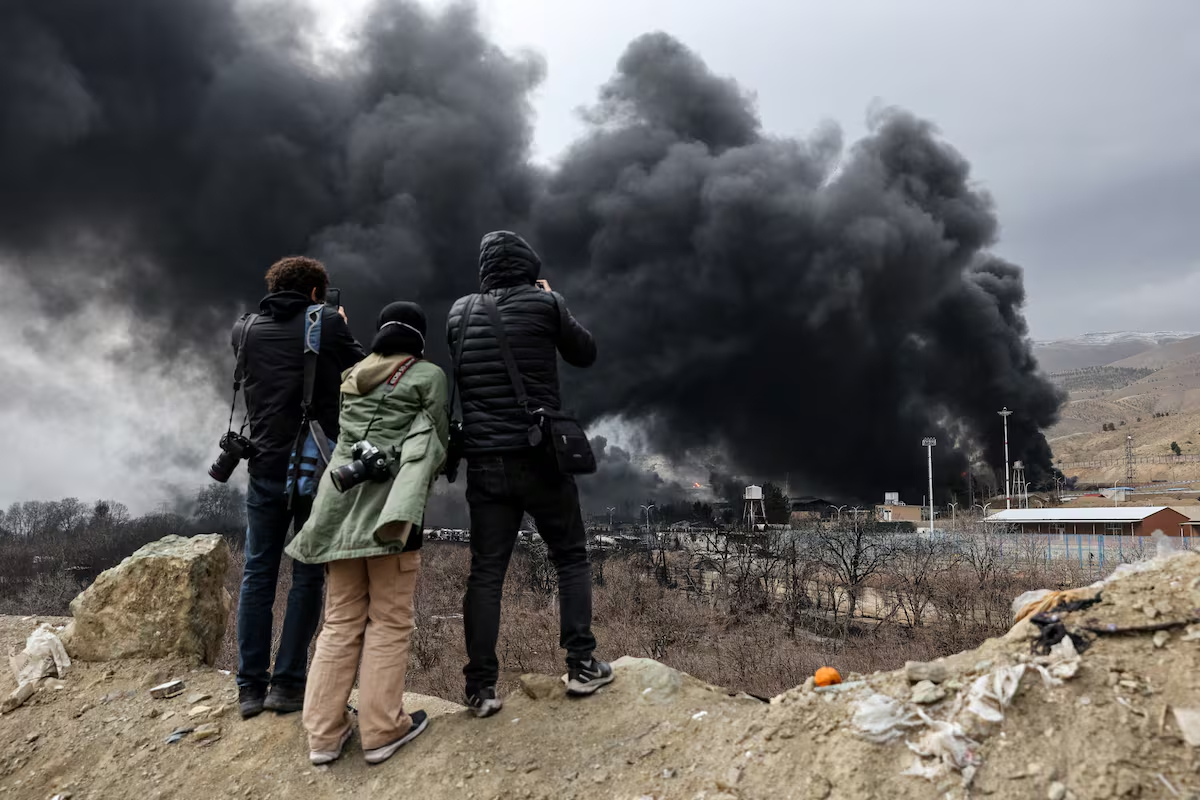
The WHO warned of toxic "black rain" over Iranian areas: fires at fuel depots and attacked refineries saturated clouds with pollutants that then fell on civilian populations. Evin prison receives bread and water in minimal quantities. Iranian cities emptied of traffic; civilians stopped going to work.
An American strike against what turned out to be an Iranian primary school is under investigation. Initial reports indicate more than 165 victims, most of them children, as a result of outdated military coordinates. There is no official Pentagon confirmation yet.
Hezbollah launched nearly 200 rockets at northern and central Israel, causing structural damage in residential areas. Israel responded with "large-scale" strikes on the southern suburbs of Beirut. The toll in Lebanon surpasses 634 dead and nearly 700,000 displaced since the exchanges of fire began.
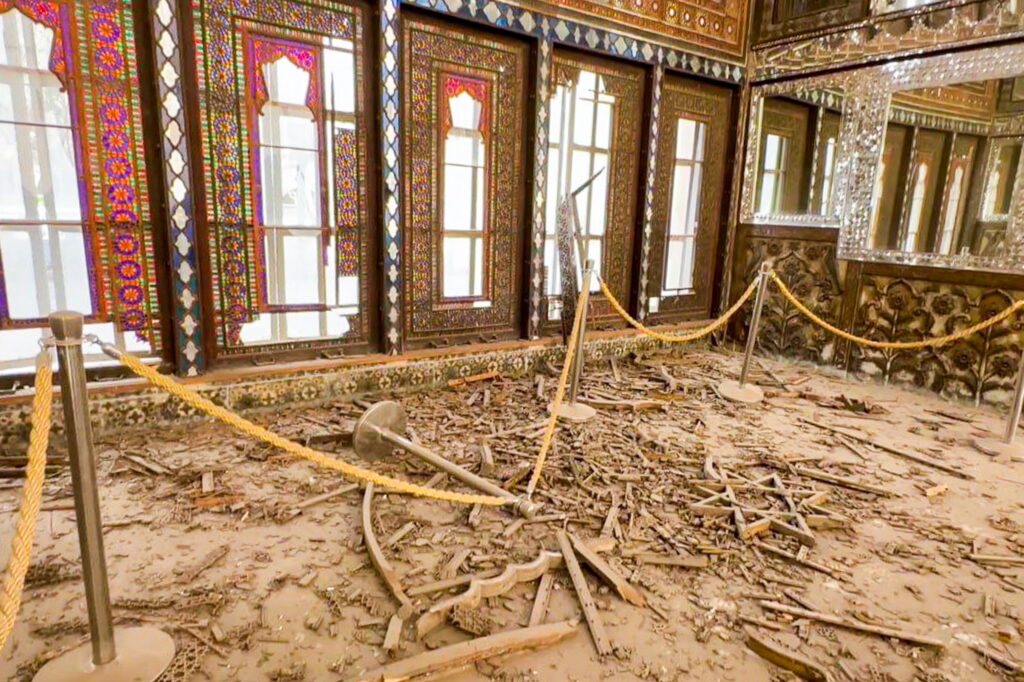
Airstrikes caused irreversible structural damage to the Golestan Palace, a gem of Qajar-era architecture in Tehran, the 17th-century Chehel Sotoun, and the Masjed-e Jame of Isfahan, the country's oldest Friday mosque. UNESCO received urgent requests for enhanced protection from both Iran and Lebanon.
What no one wants to calculate yet
The US Congress is demanding public hearings on the war's actual objectives. Legislators are questioning the administration's strategy as American casualties rise and civilian strikes remain under investigation. Trump's special envoy Steve Witkoff will travel to Israel next week to coordinate the continuation of the military campaign. Iranian Foreign Minister Abbas Araghchi was clear: his country will keep fighting "for as long as necessary."
82% of Israel's population supports the ongoing military operations, according to the Israel Democracy Institute. In Iran, hundreds of thousands took to the streets in Tehran to back the new Supreme Leader.
Twelve days, six thousand strikes, a hundred dollars a barrel, and 440 kilos of uranium that no one knows exactly how to recover. The most expensive Gulf war in decades has just entered the phase where the original plans no longer work and the new ones don't yet exist.