Technology•4 min read
Samsung Galaxy S26 vs Honor Magic V6: the 2026 Flagship War Between Services and Innovation

Samsung takes the Galaxy Unpacked stage to present the Galaxy S26 series with a strategy that no longer surprises anyone: more integrated artificial intelligence, Samsung Pay upgrades, digital health features, and a services ecosystem that promises to turn your phone into an omnipresent personal assistant. Leaked specs confirm what was already suspected: Samsung is not fighting the raw hardware war. It is selling software wrapped in premium design. Meanwhile, Honor has just launched the Magic V6, a foldable phone with a 7,150 mAh battery that challenges every current autonomy limitation in ultra-thin devices.
Samsung's strategy is clear but also predictable. The Galaxy S26 will not bring dramatic leaps in processor, cameras, or design. Instead, the South Korean company is doubling down on on-device AI, that marketing term that basically means your phone will process your data locally rather than sending it to the cloud. Practical translation: faster responses, greater privacy, and features that work without an internet connection. Samsung will also upgrade Samsung Pay with more robust biometric authentication and expand the digital health functions that nobody uses but that sound impressive in corporate presentations.
Honor Strikes Back with a Battery That Defies Physics
The Honor Magic V6, announced on February 17th and scheduled for global launch at the Mobile World Congress on March 2nd, represents the opposite approach: aggressive hardware innovation that solves the most frustrating problem with modern smartphones. The 7,150 mAh battery is outrageous for a foldable device that promises to stay under 10 millimeters thick when closed. For context, most current foldable phones struggle to surpass 5,000 mAh without turning into pocket-deforming bricks.
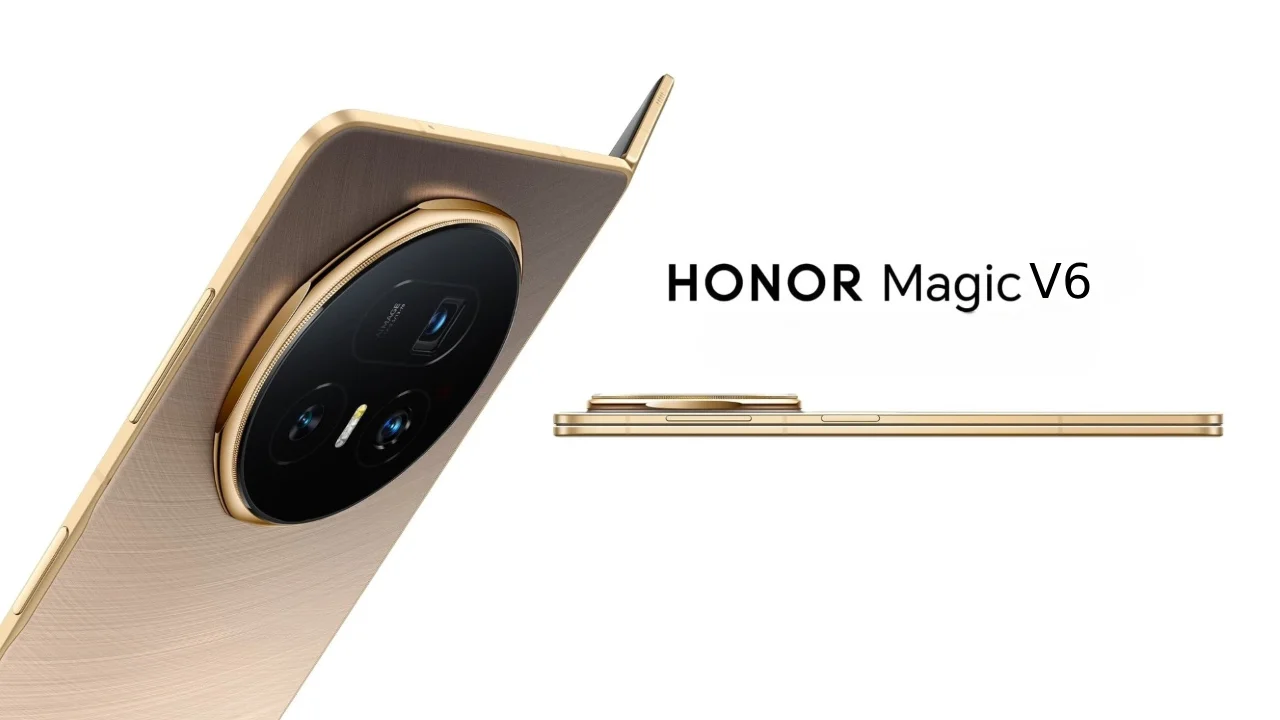
Honor achieved this through silicon-carbon battery cell technology, a technique that increases energy density without proportionally increasing volume or weight. The practical result is a foldable phone that could last two full days of heavy use, something Galaxy Z Fold 5 users can only dream about while desperately hunting for outlets at 4 in the afternoon.
The Strategic Divergence: Services vs. Tangible Features
Samsung and Honor are fighting different wars in the same market. Samsung bets on the ecosystem: if you already own a Galaxy Watch, Galaxy Buds, a Galaxy tablet, and a Samsung TV, the Galaxy S26 will integrate seamlessly with all of it. The value proposition is reduced friction between devices, automatic data synchronization, and that feeling that everything "just works." It is Apple's strategy but with Android.
Honor, on the other hand, is competing with specs you can measure: 7,150 mAh is not a vague promise of "improved user experience", it is concrete hours of screen-on time. That is the difference between aspirational marketing and tangible advantages any user can verify. And in markets where consumers are more skeptical of corporate promises, that difference matters.
The Flagship Market Context in 2026
Both strategies respond to the same brutal reality: the premium smartphone market is saturated. Upgrade cycles have stretched from 18 months to 3 years or more. 2023 phones still work perfectly in 2026. To convince someone to spend $1,200 on a new flagship, you need to offer something their current phone cannot do. Samsung bets that something is integrated artificial intelligence and digital services. Honor bets it is a battery that lasts days and a foldable design that does not force you to choose between functionality and portability.
The February 25th Galaxy Unpacked will confirm whether Samsung truly has software innovations convincing enough to justify the upgrade. And the global launch of the Honor Magic V6 at MWC on March 2nd will show whether Western consumers are willing to trust a relatively new Chinese brand with battery promises that sound too good to be true. For now, the battle is open and neither company has a guaranteed victory.
Sources
The most important news while you enjoy a cup of coffee.
Join our community. Get our exclusive weekly analysis before anyone else.
Related News

TecnologíaGlobal
5 min read
NASA confirms the date and menu for Artemis II
The Orion spacecraft has no refrigerator or resupply. That's why NASA designed 189 unique items, amaranth as protein, five types of hot sauce, and 43 cups of coffee for 10 days around the Moon.

TecnologíaDinero
5 min read
Meta lays off 16,000 people. Its stock rises 3%
Reuters confirmed plans to cut up to 20% of Meta's workforce. Wall Street celebrated the news with a 3% surge. In 2026, AI already justifies 55,775 layoffs in the tech sector.

Tecnología
6 min read
AI already solves centuries-old math. What your bank encrypts is being rebuilt from scratch.
AlphaEvolve surpassed any known human solution in 20% of 67 open mathematical problems. At the same time, the RSA encryption that protects banks and government networks has been in the process of replacement for months. Two converging transformations.


