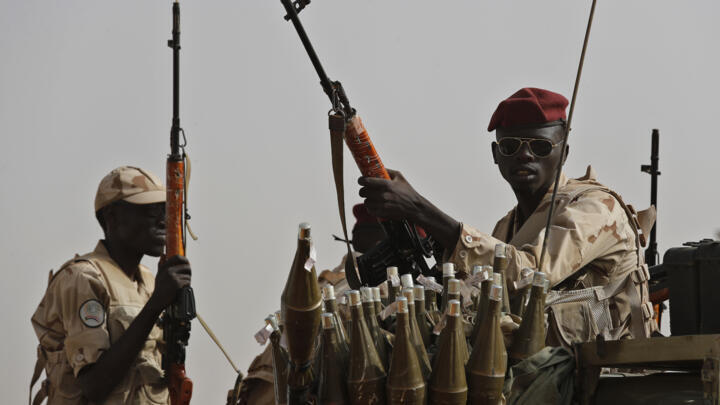
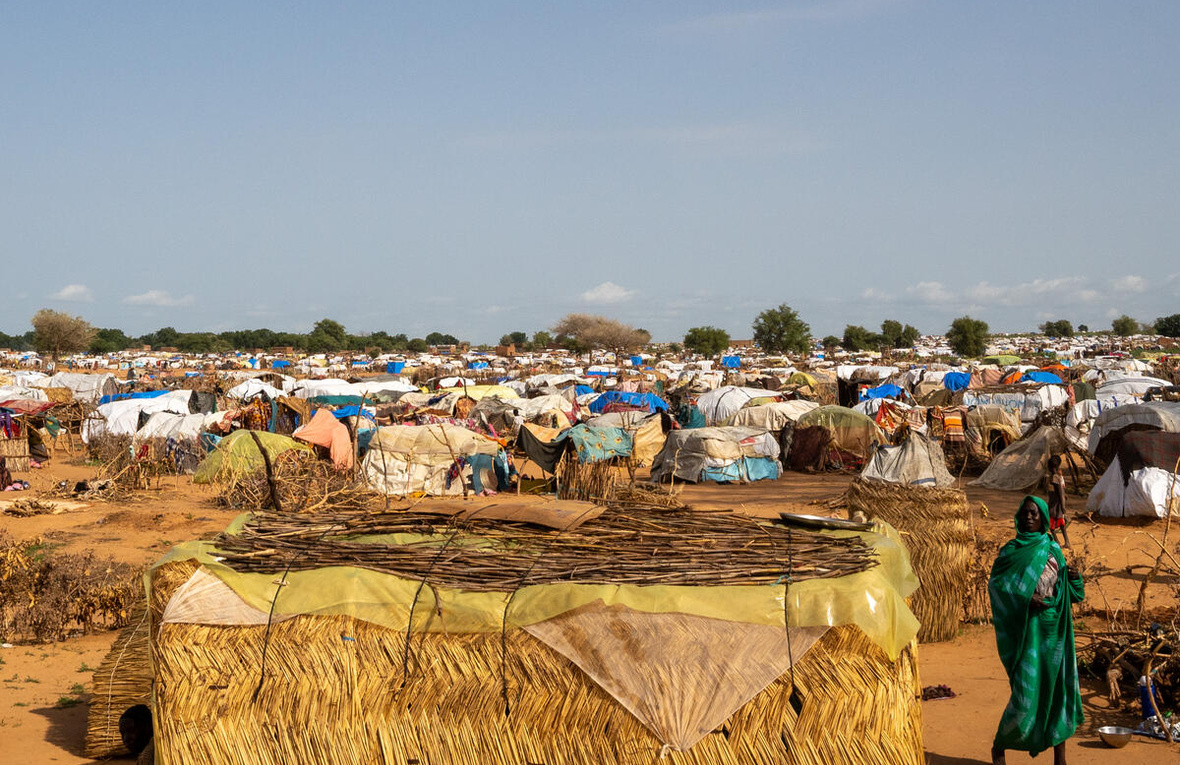
The Independent International Fact-Finding Mission for Sudan presented a report this Thursday to the UN Human Rights Council that leaves no room for euphemism: what is happening in Al Fasher, the capital of North Darfur, shows clear signs of genocide. The group responsible is the Rapid Support Forces (RSF), the same paramilitary group at war with the Sudanese army since April 2023.
This is not a diffuse armed conflict. It is a documented campaign of extermination with an ethnic objective.
Testimonies Confirming Genocidal Intent
The UN report includes chilling testimonies from RSF militiamen who admit to having killed "hundreds of civilians in a single day." These are not confessions extracted under torture. They are voluntary statements made with pride, as if reporting operational success to superiors. The Mission also documented public speeches by RSF commanders explicitly calling for the "elimination" of the Zaghawa and Fur. When military leaders openly say "we must wipe them from the map" and then do so systematically, the legal definition of genocide is met without room for ambiguity.
Sexual violence is being used as a deliberate weapon of war. Investigations reveal that non-Arab women and girls are systematically raped in front of their families before the men are executed. The logic is twofold: you destroy the community's social cohesion and ensure that survivors never want to return due to trauma. It is a classic tactic of genocidal conflict: Srebrenica, Rwanda, Bangladesh in 1971. History repeats itself because the international community continues to respond with the same criminal slowness.
Forced Displacement and Total Destruction
Al Fasher, a city of approximately 300,000 inhabitants before the conflict, is being methodically emptied. The RSF does not only attack people, it destroys entire infrastructure: water wells, health clinics, schools, markets, mosques. The strategy is clear: ensure that even if some civilians escape, they cannot return because there will be nothing to come back to. Satellite images show entire villages reduced to ashes in concentric circles spreading outward from Al Fasher.
The UN report documents that the RSF coordinates attacks with local Arab militias (Janjaweed), the same groups responsible for the Darfur genocide of 2003–2004 that killed 300,000 people. The difference now is scale and sophistication: the RSF has heavy artillery, commercial drones modified for bombing, and superior logistical coordination. These are not disorganized gangs. They are a professionalized paramilitary force executing a systematic extermination plan.
Expansion into Kordofan: The Genocide Spreads
UN experts warn that the patterns of genocidal violence observed in Al Fasher are being replicated in the Kordofan region, south of Darfur. The RSF's territorial expansion coincides with an escalation of atrocities. Each city they capture repeats the same pattern: ethnic identification of the population, separation of young men, mass executions, systematic rape, destruction of infrastructure. It is industrial genocide, executed with terrifying efficiency.
The international community is reacting with predictable glacial speed. The US State Department announced sanctions against three senior RSF commanders implicated in atrocities. The sanctions freeze financial assets in Western banks and ban travel to allied countries. It is a symbolic response. The sanctioned commanders operate from Sudan, have no assets in Chase Manhattan, and were not planning vacations in Paris. The sanctions are diplomatic theater that allows Washington to say "we did something" without committing significant military or humanitarian resources.
The Curse of Humanitarian Intervention
Sudan's tragedy exposes the structural hypocrisy of the international system. After Rwanda, the global community swore "never again." After Srebrenica, it created the doctrine of the "responsibility to protect" (R2P), which supposedly obligated intervention when states commit genocide. But R2P only works when intervention is geopolitically convenient. Libya 2011: rapid intervention because Gaddafi was an enemy of the West. Syria 2013–present: inaction because intervention would complicate relations with Russia. Sudan 2026: silence because the country is remote, poor, and strategically irrelevant.
The UN Mission can document genocide. It can produce 500-page reports with irrefutable forensic evidence. It can testify in international tribunals five years from now. But meanwhile, 145 people continue to die every day in Al Fasher. The Zaghawa and Fur are being erased from the map in real time while diplomats in Geneva debate the technical language of resolutions that will never be implemented.
This report of February 19, 2026 will enter history as another impotent document that confirmed atrocities without stopping them. Future generations will read these testimonies in human rights classes and ask: "How did they let it happen again?" The answer is simple and depressing: because allowing genocides is easier than stopping them. And Sudan has the misfortune of unfolding at a moment and in a place where no one powerful enough considers it worth intervening.